Industrial "All-Rounder": Unveiling the Core Functions of the HVM Vertical Roller Mill
In the vast industrial world, there is a piece of equipment that, while not widely known to the public, can truly be called the "unsung hero" of modern industrial civilization. It is widely used in cement, power generation, metallurgy, chemical, and other fields, shouldering the heavy responsibility of transforming massive rocks into fine powder. This equipment is the HVM Vertical grinding mill, or simply the HVM mill. Today, we will take an in-depth look at what exactly the core functions of this machine are.
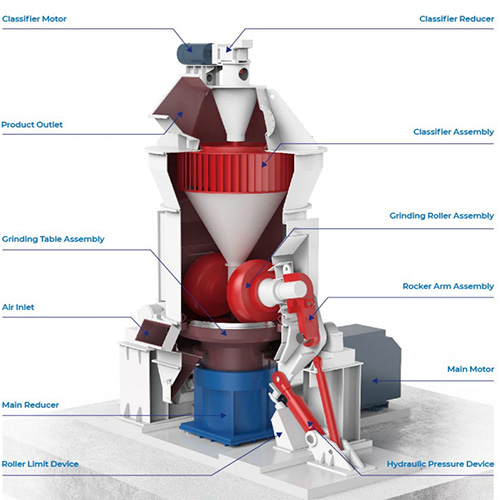
If we were to sum it up in one sentence, the core function of the HVM Energy Saving Vertical Roller Mill is "four-in-one"—integrating grinding, classifying, drying, and conveying into a single system. It acts like a powerful "machining center": raw materials go in, finished products come out, and all the complex intermediate processes are completed seamlessly within its body.
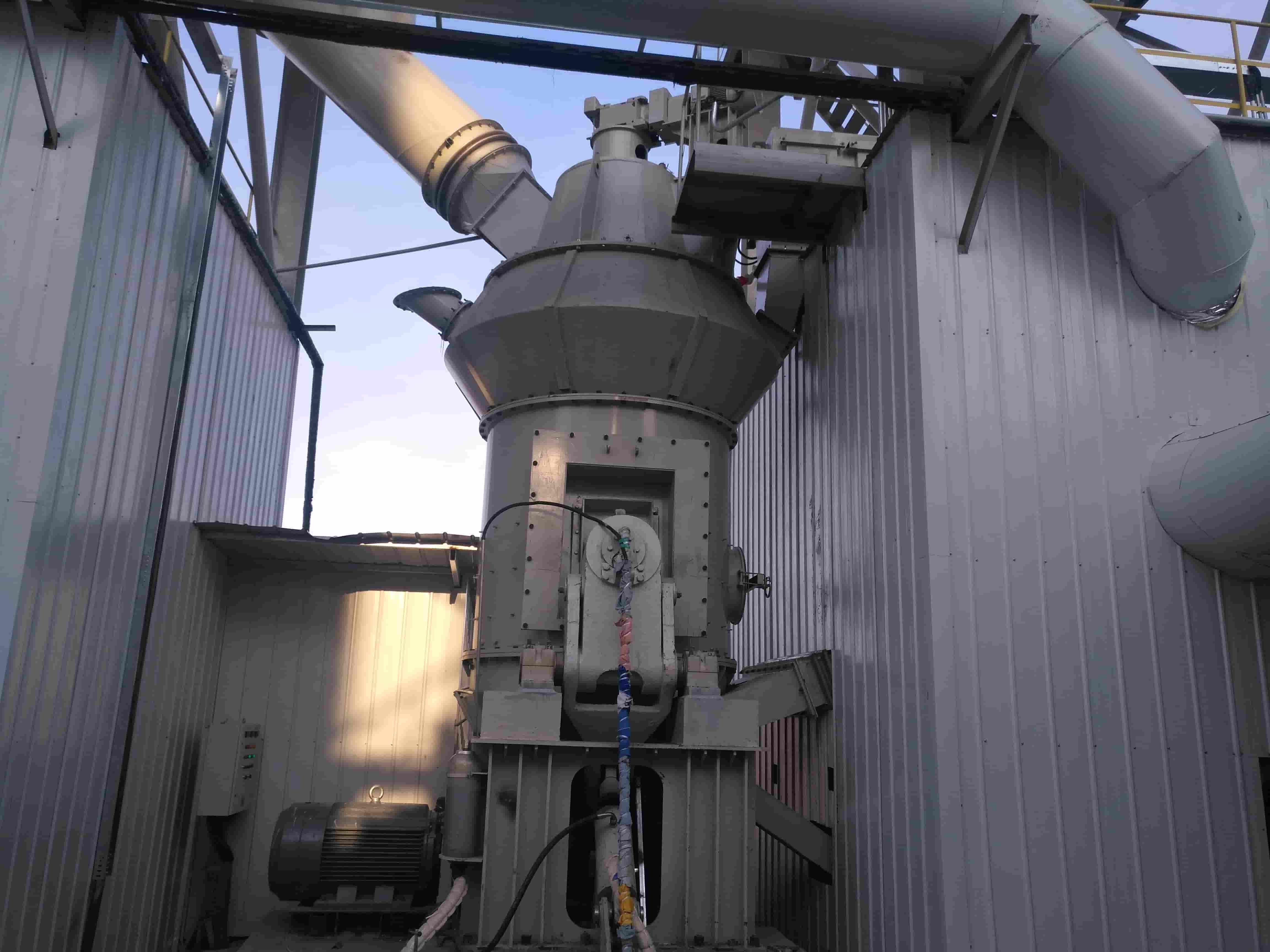
Function 1: Crushing and Grinding – The Power of Compression
This is the most fundamental and important function of the vertical mill. Unlike traditional ball mills, which rely on steel balls colliding with each other to crush materials, the vertical mill uses "compression" and "interparticle crushing" technology.
Its working area mainly consists of a rotating grinding table and multiple fixed grinding rollers. When material falls from the top feed inlet onto the center of the rotating table, immense centrifugal force throws it toward the edge of the table, forming a uniform material bed. At this point, a hydraulic system drives the rollers, applying hundreds of tons of pressure onto the material. Large chunks are directly crushed, while finer particles undergo "interparticle crushing" under intense squeezing. This compression method is not only highly efficient but also typically consumes 30%–40% less energy than traditional ball mills.
Function 2: Classifying – Precision Screening via Airflow
How do you ensure that the output powder is both fine and uniform? This is where the second core function of the HVM vertical mill comes into play—classifying.
After being ground, the material is carried upward by hot air (or airflow) blown from beneath the grinding table, rising to the dynamic classifier located at the top of the machine. The classifier operates like a high-speed rotating fan. By adjusting its rotational speed, it can precisely control the screening standard. Qualified fine powder passes through the gaps between the blades and is carried by the airflow to the next stage for collection as finished product, while coarse particles that fail to meet the fineness requirement are blocked by the blades and fall back onto the grinding table for further grinding. This allows the vertical mill to flexibly adjust product fineness, ranging from several tens of meshes to several hundred meshes.
Function 3: Drying – Integrated Drying During Grinding
Many industrial raw materials—such as slag and raw meal—contain moisture. If dried separately, additional energy and equipment would be required. The HVM vertical mill elegantly solves this problem.
During the grinding process, hot air at temperatures up to several hundred degrees Celsius is continuously blown in from the lower part of the mill. This hot air not only carries the material but also transfers its substantial heat, rapidly evaporating moisture while the material is being ground. This means that the vertical mill can directly process materials with a moisture content of up to 15%, combining grinding and drying into one step and greatly simplifying the overall process flow.
Function 4: Conveying and Reject Discharge – The Wisdom of "Containing All"
Finally, the HVM vertical mill also plays the dual roles of conveyor and "cleaner."
The powerful airflow lifts all powdered material from the edge of the grinding table and carries it into the classifier, achieving pneumatic conveying of the material. At the same time, the mill has its own way of handling "hard nuts" that cannot be ground—such as iron scraps or other tramp metal mixed into the raw material. Because these heavy objects are too heavy to be carried away by the airflow, they fall directly to the bottom of the mill, where they are pushed out through the reject discharge outlet by scraper plates. This effectively protects the grinding rollers and table from damage.
From massive ores to fine, high-quality powder, the HVM Vertical Roller Mill manufactured by Hefei Hengcheng uses a sophisticated system to efficiently integrate the five major functions of crushing, grinding, classifying, drying, and conveying. It not only saves on equipment investment and floor space but also, with its outstanding energy efficiency and stable product quality, stands as the ideal choice in the modern industrial grinding field.