Starting a popcorn business does not always mean buying a large production line. The right equipment depends on where you will sell popcorn, how much you expect to produce, whether you will make flavored popcorn, and whether you plan to sell fresh popcorn directly or package it for retail.
For most popcorn businesses, the essential equipment starts with a commercial popcorn machine, followed by suitable ingredients and a way to hold, flavor, dispense, or package the finished popcorn. Larger popcorn factories may also need industrial popping, coating, cooling, conveying, and packaging equipment.
XFD Popcorn provides equipment for different stages of popcorn production, from commercial and cinema popcorn machines to industrial production lines, coating equipment, staging cabinets, packing machines, and popcorn ingredients. This makes it possible to build a popcorn equipment setup around the actual business model instead of buying every machine at once.
What Equipment Do You Need to Start a Popcorn Business?
The basic equipment needed to start a popcorn business usually includes:
- A commercial popcorn machine or cinema popcorn machine
- Popcorn kernels and popping oil
- Seasoning, caramel, or other flavoring ingredients
- A staging cabinet or popcorn warmer for holding finished popcorn
- Serving containers, bags, cups, or popcorn packaging
- Coating equipment if you plan to sell flavored or gourmet popcorn
- Packaging equipment if you plan to sell pre-packed popcorn
The important point is that not every popcorn business needs all of these machines from day one. A small popcorn shop may only need a commercial popcorn machine, ingredients, serving packaging, and a warmer. A cinema may need a higher-capacity popcorn machine and staging equipment. A factory producing packaged popcorn will require a much more complete production and packaging system.
For businesses starting with fresh popcorn sales, XFD's commercial popcorn machines provide different configurations for shops, concession stands, bars, large venues, and other commercial applications.
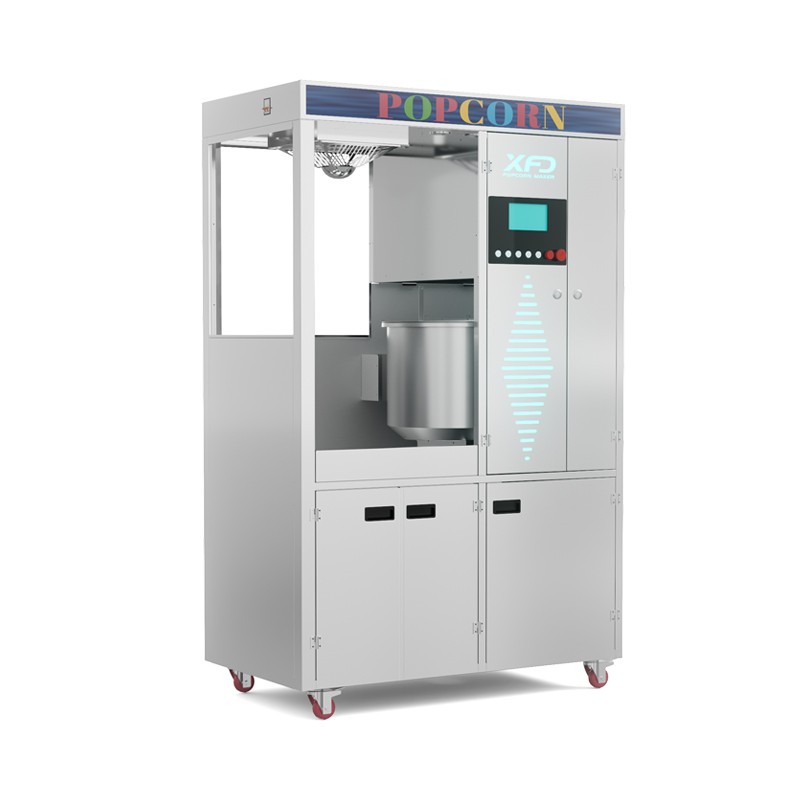
Commercial Popcorn Machine: The Core Equipment
For a small or medium-sized popcorn business, the popcorn machine is usually the first major equipment investment. It determines how much popcorn you can make per batch, how quickly you can respond to customer demand, and how consistently you can produce popcorn throughout the day.
A small popcorn shop, snack store, catering business, or concession stand may not need an industrial system. A commercial machine with an appropriate kettle capacity can be a more practical starting point.
When choosing a commercial popcorn machine, consider:
- Expected popcorn sales during peak hours
- Kettle capacity
- Batch cycle time
- Heating technology
- Available electrical supply
- Available counter or floor space
- Type of popcorn you plan to produce
- Whether you need caramel or other flavored popcorn
For example, a small business may consider a compact 16 oz machine, while busier concession operations may require 28 oz, 36 oz, 48 oz, or larger configurations. XFD currently offers commercial popcorn machines in different configurations, allowing the equipment to be matched to the actual application rather than simply choosing the largest available model.
Cinema Popcorn Machine for High-Traffic Venues
If your popcorn business will operate inside a cinema, entertainment venue, stadium, arena, or another location with strong peak-hour demand, a cinema popcorn machine may be more appropriate than a small commercial model.
The main difference is not simply the appearance of the machine. The more important consideration is whether the equipment can maintain a steady supply of fresh popcorn during busy periods.
For a cinema or high-traffic concession operation, equipment selection should be based on peak demand rather than average daily sales. A machine that is sufficient during quiet periods may become a bottleneck when several customers arrive at the same time.
XFD provides a dedicated range of cinema popcorn machines, including different kettle capacities and configurations for professional cinema and high-volume commercial applications.
Popcorn Ingredients: Kernels, Oil, and Flavoring
A popcorn machine alone is not enough to operate a popcorn business. Consistent raw materials are equally important because the quality of the finished popcorn depends on the kernels, oil, seasoning, and flavoring used during production.
The basic ingredients may include:
- Popcorn kernels
- Coconut oil or other suitable popping oil
- Salt and seasoning
- Caramel or caramel powder
- Chocolate or other sweet flavoring
- Fruit or specialty flavoring powders
If your business focuses on gourmet popcorn, offering multiple flavors can help create a broader product range without requiring a completely different popping machine for every flavor.
XFD supplies popcorn ingredients including raw corn kernels, coconut oil, palm oil, caramel, chocolate sugar, strawberry sugar, butter toffee, and other popcorn flavoring products.
Popcorn Coating Equipment for Gourmet Flavors
If you plan to sell caramel popcorn, chocolate popcorn, fruit-flavored popcorn, or other gourmet products, popping is only part of the production process. You also need a reliable way to distribute the flavoring evenly across the popcorn.
For small businesses, a combined popper and caramelizer can reduce the amount of separate equipment required. For larger operations, dedicated coating and flavoring equipment provides more control over production.
The right coating equipment depends on whether you are making small batches for direct retail sales or producing flavored popcorn at a larger commercial or factory scale.
XFD offers dedicated popcorn coating machines and flavoring solutions for businesses that need to produce caramel, chocolate, or other flavored popcorn products.
Popcorn Staging Cabinet or Warmer
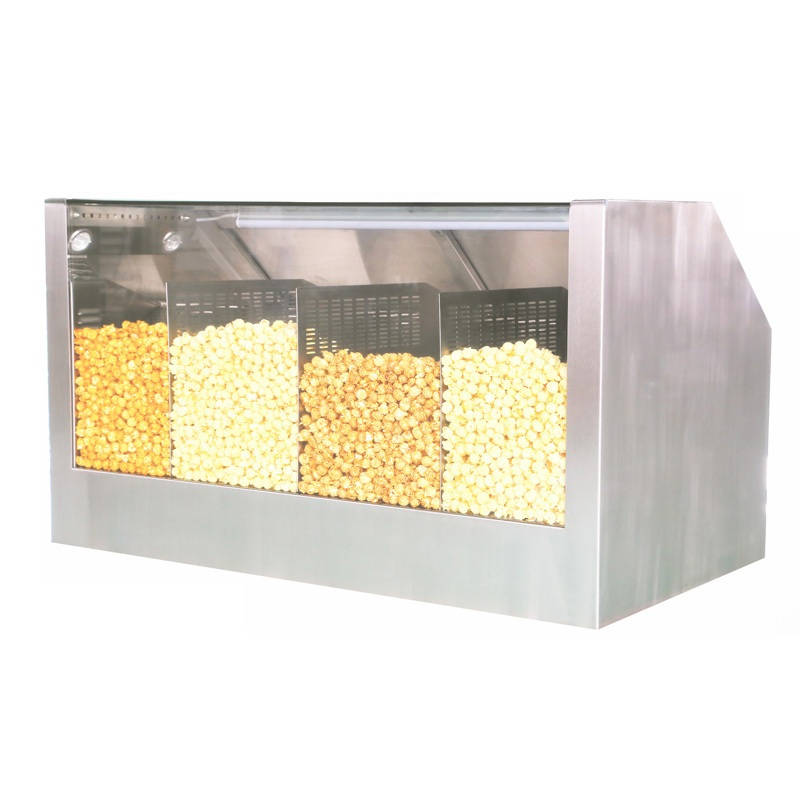
A popcorn business also needs to think about what happens after the popcorn is produced. If the popcorn cannot be served immediately, a staging cabinet or warmer can help maintain product temperature, freshness, and presentation.
This equipment is particularly useful for cinemas, concession stands, popcorn shops, and self-service environments where popcorn needs to remain available for customers throughout the selling period.
A staging cabinet can also become part of the customer-facing display. Instead of treating it as simple storage equipment, businesses can use the equipment to keep popcorn ready for serving while making the product more visible at the point of sale.
XFD's popcorn staging cabinets are designed to help keep popcorn fresh and crisp while providing different display and self-service configurations.
Packaging Equipment for a Packaged Popcorn Business
If your business model is based on selling freshly made popcorn directly to customers, you may only need simple bags, cups, or containers. However, if you want to produce popcorn for retail shelves, wholesale distribution, supermarkets, or online sales, packaging becomes a much more important part of the equipment plan.
A larger popcorn production operation may need equipment for:
- Weighing
- Filling
- Bag forming or premade-bag handling
- Sealing
- Date and batch coding
- Counting
- Conveying
In this type of business, the packaging machine should be matched with the output of the popcorn production system. There is little benefit in having a high-output popcorn machine if the packaging process becomes the production bottleneck.
For businesses moving toward packaged popcorn, XFD provides popcorn packing machines for different packaging applications.
Industrial Popcorn Equipment for Factory Production
If your plan is to manufacture popcorn at factory scale rather than sell individual servings at a shop or cinema, the equipment requirements change significantly.
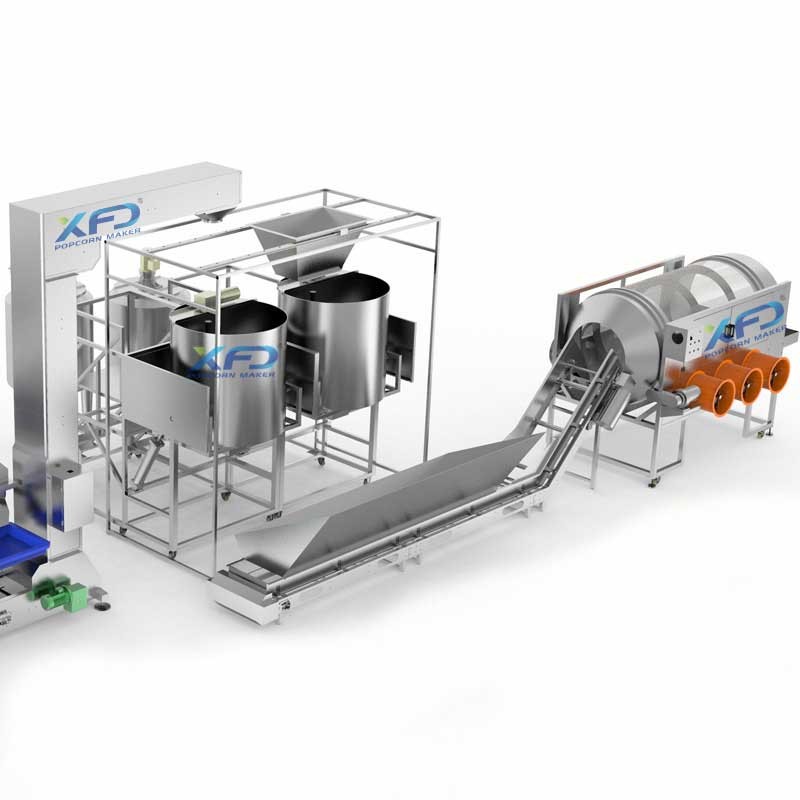
An industrial popcorn production system may include:
- Industrial popcorn popping machines
- Oil feeding systems
- Conveyors
- Cooling and filtering equipment
- Flavoring or coating equipment
- Storage or staging equipment
- Automatic packaging equipment
At this level, the important question is no longer simply “What popcorn machine should I buy?” Instead, the better question is “What production capacity should the complete popcorn line achieve?”
XFD's industrial solutions include electromagnetic popcorn production lines and popcorn production and coating systems. Published XFD configurations range from approximately 50–160 kg/h depending on the equipment configuration and production requirements.
For example, one XFD popcorn production and coating configuration is listed at approximately 60–80 kg/h and integrates popping, oil feeding, conveying, cooling, filtering, and coating processes.
For businesses planning larger-scale manufacturing, the industrial popcorn machine and production line range is more relevant than a conventional countertop or small commercial popcorn maker.
How Do You Choose Popcorn Equipment Based on Business Size?
| Business Type | Typical Equipment Focus | Main Consideration |
|---|---|---|
| Small popcorn shop | Commercial popcorn machine, ingredients, serving packaging | Compact size and sufficient peak-hour capacity |
| Gourmet popcorn shop | Popcorn machine, flavoring/coating equipment, ingredients | Flavor variety and coating consistency |
| Cinema or large concession venue | Cinema popcorn machine, staging cabinet, dispensing equipment | Peak-hour production and product availability |
| Popcorn factory | Industrial popping, coating, cooling, conveying, packaging | Continuous production capacity and automation |
Do You Need a Complete Popcorn Production Line to Start?
No. A complete popcorn production line is not necessary for every new popcorn business.
If you are opening a small shop or concession stand, starting with a suitable commercial popcorn machine can be more practical. You can add a staging cabinet, coating equipment, dispensing equipment, or packaging equipment as your product range and sales volume increase.
A complete production line becomes more relevant when you need consistent high-volume production, multiple processing stages, reduced manual labor, and packaged popcorn output.
This staged approach can also help businesses avoid purchasing equipment that they do not immediately need.
What Should You Tell a Popcorn Equipment Manufacturer Before Buying?
Before asking for a quotation, prepare some basic information about your business. The more specific the information, the easier it is for the equipment manufacturer to recommend a suitable configuration.
- What type of business are you opening?
- Where will the popcorn be sold?
- How many customers do you expect during peak hours?
- How much popcorn do you expect to produce per hour?
- Will you sell traditional popcorn, caramel popcorn, or multiple flavors?
- Will popcorn be sold fresh or packaged?
- What voltage and electrical supply are available?
- How much floor or counter space is available?
- Do you plan to expand production in the future?
For industrial projects, it is especially useful to provide a target output such as 50 kg/h, 80 kg/h, 100 kg/h, or more. The equipment supplier can then evaluate the popping, coating, cooling, conveying, and packaging capacity as a complete system rather than selecting a popcorn machine in isolation.
What Is the Best Equipment Setup for a New Popcorn Business?
For most new popcorn businesses, the best approach is to buy equipment according to the actual sales model:
For a small popcorn shop: Start with a commercial popcorn machine, quality ingredients, serving packaging, and a suitable warmer or staging solution.
For a gourmet popcorn shop: Add coating or caramelizing equipment so you can offer multiple flavored popcorn products.
For a cinema or high-traffic venue: Focus on cinema-grade production capacity, peak-hour output, staging, dispensing, and ease of operation.
For a popcorn factory: Consider an integrated industrial system covering popping, oil feeding, conveying, cooling, coating, and packaging.
XFD's product range covers these different levels of popcorn production, from individual commercial popcorn machines to industrial popcorn production and coating lines. The company also provides related ingredients, staging, coating, and packaging equipment, making it possible to develop a complete popcorn production solution around the customer's application.
Frequently Asked Questions About Starting a Popcorn Business
What is the most important equipment for a popcorn business?
The popcorn machine is usually the most important piece of equipment because it directly determines production capacity and operating efficiency. However, the right model depends on the business type, peak demand, kettle capacity, and available installation conditions.
What equipment do I need for a small popcorn shop?
A small popcorn shop can often start with a commercial popcorn machine, popcorn kernels, oil, flavoring ingredients, serving bags or cups, and a suitable warmer or staging cabinet. Additional coating or dispensing equipment can be added when the business grows.
Do I need an industrial popcorn machine to start a popcorn business?
No. Industrial popcorn equipment is mainly intended for large-scale production and factory applications. A shop, concession stand, or small commercial operation will usually be better served by appropriately sized commercial or cinema equipment.
What equipment do I need to make caramel popcorn commercially?
You need a suitable popcorn machine plus caramel or other flavoring ingredients. Depending on production volume, a combined popper and caramelizer or dedicated popcorn coating equipment can be used to improve flavor distribution and production efficiency.
Do I need a popcorn packing machine?
Not necessarily. If you sell fresh popcorn directly to customers, simple serving bags or containers may be enough. A packing machine becomes more important when you produce packaged popcorn for retail, wholesale, supermarkets, or other distribution channels.
How do I choose the right popcorn machine capacity?
Start with your expected peak-hour demand rather than average daily sales. Compare the amount of popcorn you need during the busiest period with the machine's kettle capacity, batch cycle, and hourly production capability. Also consider future business growth before selecting the final configuration.
Can one supplier provide a complete popcorn business equipment solution?
Yes. XFD provides commercial and cinema popcorn machines as well as industrial popcorn production lines, coating equipment, staging cabinets, packing machines, and popcorn ingredients. This allows equipment to be selected as individual machines or as part of a more complete popcorn production solution.
Start With the Equipment Your Business Actually Needs
Starting a popcorn business does not require every piece of equipment at once. The most practical setup depends on whether you are serving fresh popcorn in a small shop, operating a high-volume cinema concession, selling gourmet flavored popcorn, or manufacturing packaged popcorn for wholesale and retail markets.
The basic starting point is a suitable popcorn machine and reliable ingredients. As production and product requirements increase, coating, staging, dispensing, cooling, and packaging equipment can be added to create a more efficient workflow.
With commercial popcorn machines, cinema equipment, industrial production lines, coating systems, staging cabinets, packing machines, and popcorn ingredients, XFD can support different stages of popcorn business development—from a single popcorn shop to a high-capacity popcorn production facility.
If you are planning a new popcorn business, the most useful information to provide an equipment manufacturer is your business type, expected hourly output, peak customer traffic, popcorn flavors, available space, voltage, and future production plans. These details make it much easier to select equipment that fits the business rather than simply choosing the largest machine.