Introduction
In the competitive world of air filter manufacturing, precision and efficiency aren't just advantages—they're requirements. As demand for high-quality HEPA filters continues to grow across industries ranging from healthcare to automotive, manufacturers are turning to automated solutions that deliver consistent, reliable results. Two technologies have emerged as game-changers: the fully automatic foaming machine and the HEPA mini production line.(Bengbu Tongchen Automation Technology Co., Ltd.)
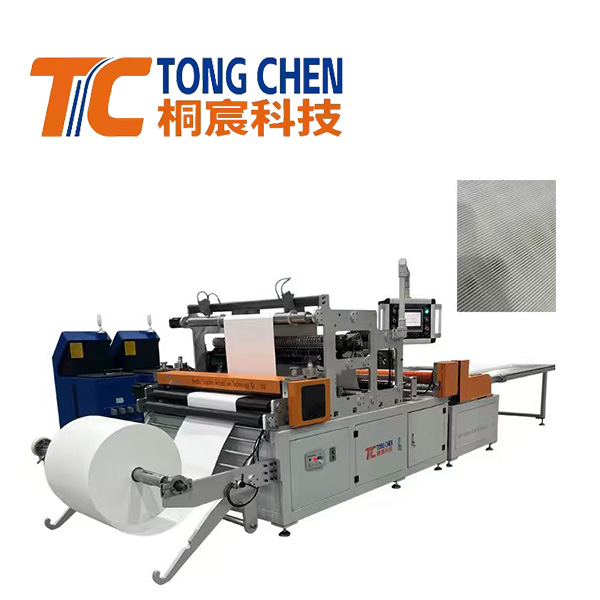
This guide explores how these integrated systems work together to revolutionize filter production, offering insights into their benefits, applications, and why they represent the future of the industry.
What Is a Fully Automatic Foaming Machine?
A fully automatic foaming machine—also known as an automated PU foam gasket dispensing system—is specialized equipment designed to apply polyurethane foam seals directly onto components. In the context of HEPA filter manufacturing, these machines create precision-formed gaskets that ensure an airtight seal between the filter frame and its housing.
Key Components and How They Work
The system integrates several critical elements:
1. Metering and Mixing System: Dual-component materials (isocyanate and polyol) are precisely measured and mixed. According to industry specifications, mixing ratios typically range from 4.5:1 to 2.8:1 depending on the material formulation.
2. Precision Mixing Head: The dynamic mixing head ensures thorough material blending. Some advanced systems, like the DM 503, support multi-component mixing for simultaneous sealing and bonding operations.
3. Robotic Positioning: Three-axis linear robots guide the mixing head with high precision, following pre-programmed contours to apply foam gaskets with exacting accuracy.
4. Control Interface: Modern systems feature intuitive touchscreen controls that allow operators to monitor and adjust parameters in real-time while logging all process data for quality assurance.
Why Automated Foam Gasketing Beats Traditional Methods
Manufacturers transitioning from manual gasket installation to automated foaming realize immediate improvements:
Precision and Consistency
Hand-cut and hand-placed seals suffer from variations in alignment, compression, and fit. Automated systems eliminate these variables, producing gaskets with uniform density, thickness, and volume. This ensures every filter meets specifications, reducing rejection rates significantly.
No Seams, No Leaks
Traditional gaskets require joining separate pieces at corners—a point of weakness where leaks can develop. FIPFG (Formed-In-Place Foam Gasket) technology creates a continuous, seamless seal around the entire perimeter of the filter frame. After dosing, the coupling point closes seamlessly and becomes virtually invisible.
Faster Cycle Times
Materials like the FERMAPOR K31 foam systems feature tack-free times as short as 5 minutes with room-temperature curing, eliminating the need for expensive ovens or extended curing periods.
Material Efficiency
Automated dispensing applies only what's needed, reducing waste compared to die-cut gaskets. Foamed adhesives for filter bonding can reduce adhesive consumption by up to 50% compared to compact adhesive sealants.
The HEPA Mini Production Line: A Complete Manufacturing Solution
While the foaming machine addresses sealing, the HEPA mini production line handles the critical task of filter media pleating, folding, and initial assembly.
Core Specifications
Typical HEPA mini-pleating production lines feature:
Essential Features
1. Automated Pleating Control: Servo-controlled systems maintain precise pleat alignment without requiring roller changes for different heights.
2. Tension Control: Air-expansion shafts with brake control systems automatically maintain consistent paper feed tension, preventing wrinkles or distortion in the filter media.
3. Flexible Dispensing Options: Machines offer multiple dispensing modes—continuous, separate, two-sided, or one-sided—in both automatic and manual configurations.
4. Integrated Edge Cutting: Built-in cutting devices trim edges automatically, streamlining production and reducing handling steps.
The Technology Behind Modern Foam Sealing Systems
Material Science
Modern PU foam systems deliver specific engineered properties:
Density: Approximately 0.2 g/cm³, creating lightweight yet effective seals
Hardness: Shore 00 35, providing an optimal balance of compressibility and durability
Temperature Resistance: -40°C to +80°C, suitable for diverse operating environments
Recovery: Excellent shape recovery characteristics ensure consistent sealing performance even after repeated compression cycles
Room-Temperature Processing
A significant advantage of modern PU foam systems is their ability to cure at room temperature. Unlike methods requiring annealing ovens, these systems save energy, reduce capital equipment costs, and simplify facility layout.
Automation and Integration
Advanced systems offer:
Multi-process capability: Simultaneous sealing and bonding with the same dosing system
Flexible component handling: Shuttle tables operating in single or dual-level modes accommodate varying production volumes
Process monitoring: Real-time data logging ensures traceability and quality control
Applications Beyond HEPA Filters
While HEPA filter manufacturing is a primary application, the same technologies serve numerous industries:
Vacuum cleaner manufacturing: Sealing HEPA filter frames and bonding filter packs
Automotive: Air filter housings and cabin filters
Medical devices: Respirator filters and cleanroom applications
HVAC systems: Commercial and residential air filtration
Electronics enclosures: IP-rated sealing of control cabinets and junction boxes
Choosing the Right Equipment
When evaluating automated foaming and production systems, consider:
Material Compatibility
Ensure the system supports the polyurethane, silicone, or epoxy systems you require. Leading suppliers offer matched material and machine systems for optimal performance.
Production Volume
Select a system with appropriate cycle times and capacity. Shuttle table configurations can be single-level or dual-level to match throughput requirements.
Automation Level
Consider whether manual part placement suffices or whether pick-and-place robotics and camera inspection systems are justified for your operation.
Integration Capability
Look for modular systems that can integrate with existing production lines and support future expansion.
Conclusion
Fully automatic foaming machines and HEPA mini production lines represent a significant advancement in air filter manufacturing. By delivering consistent quality, reducing waste, and increasing throughput, these systems help manufacturers meet growing demand while controlling costs. Whether you're producing filters for vacuum cleaners, HVAC systems, or medical applications, the precision, efficiency, and reliability of these automated solutions make them essential tools for today's competitive marketplace.
As technology continues to evolve, expect further integration of automation, robotics, and material science to drive even greater improvements in filter production efficiency and performance. Manufacturers who invest in these systems today position themselves for success in the future of clean air technology.