In industrial popcorn production, kernel moisture is one of the most important raw material factors affecting popping consistency. Even when a factory uses the same popcorn machine, heating settings, and production process, different batches of kernels may produce noticeably different results. Some kernels pop fully and develop a large, light structure, while others remain unpopped, expand poorly, or produce popcorn with an inconsistent texture.
Why does this happen? The answer is closely related to the amount and distribution of moisture inside each kernel. Water inside the kernel turns into steam during heating, creating the internal pressure needed for the hull to rupture and the starch to expand. If moisture levels vary too much, the kernels may not respond to heat in the same way.
For popcorn manufacturers operating at high volume, understanding kernel moisture variation is essential for controlling popping yield, reducing raw material waste, and maintaining consistent finished-product quality. XFD provides industrial popcorn production equipment for different factory requirements, but consistent raw material quality remains an important part of achieving stable production results.
Why Is Kernel Moisture Important for Popcorn Production?
Popcorn kernels contain a small amount of water inside a hard outer hull. When the kernels are heated, this moisture gradually turns into steam. Pressure builds inside the kernel until the hull ruptures, allowing the softened starch to expand rapidly and form popcorn.
Moisture is therefore not simply a storage condition. It is part of the physical process that makes popcorn expansion possible.
For many commercial popcorn varieties, a moisture content around 13% to 14.5% is commonly used as a reference range. However, the ideal target depends on the kernel variety, supplier specifications, storage conditions, and intended popping process. Manufacturers should follow the kernel supplier's recommended range and confirm performance through actual popping tests.
When moisture content is suitable and reasonably consistent, kernels are more likely to respond to heating in a similar way. This helps manufacturers achieve a more predictable popping cycle, expansion result, and finished-product appearance.
What Happens When Popcorn Kernels Have Too Little Moisture?
When popcorn kernels lose too much moisture during storage, they may not develop enough internal steam pressure during heating. As a result, some kernels may fail to pop or may expand less than expected.
Low-moisture kernels can create several production problems:
- More unpopped kernels: Some kernels may not build sufficient internal pressure to rupture their hulls.
- Lower expansion volume: Popped kernels may be smaller or denser than the expected product.
- Inconsistent finished appearance: A batch may contain a mixture of well-expanded and poorly expanded popcorn.
- Lower production yield: More raw material may be required to achieve the same finished-product volume or weight.
For manufacturers selling popcorn by bag volume or finished-product weight, poor expansion can affect both packaging consistency and production costs. A batch may technically complete its popping cycle but still fail to meet the required product standard.
It is important to recognize that increasing the heating temperature is not always the correct solution. Excessive heat may cause some kernels to scorch before poorly conditioned kernels pop successfully. The first step should be to check the raw material moisture level and compare it with the supplier's recommended specifications.
How Does Excessive Kernel Moisture Affect Popping Results?
More moisture does not automatically mean better popcorn expansion. When kernels contain too much water, the popping process may become less predictable.
Excessive moisture can affect how quickly the kernel heats and how much steam pressure develops during the popping cycle. Depending on the kernel variety and the degree of moisture deviation, manufacturers may experience:
- Longer or less predictable popping cycles.
- Differences in expansion between individual kernels.
- Popcorn with a heavier or less crisp texture.
- Greater variation in finished-product quality.
- Additional difficulty maintaining a consistent production rhythm.
Moisture-related problems can also become more noticeable when a production batch contains kernels with different moisture levels. Some kernels may reach the required popping conditions earlier, while others need more heating time. This creates a wider range of popping results within the same batch.
For this reason, manufacturers should not focus only on the average moisture percentage. The distribution of moisture across the entire raw material batch is also important.
Why Does Moisture Variation Within the Same Batch Create Inconsistent Popcorn?
A batch can show an acceptable average moisture reading and still produce inconsistent popcorn. This happens when individual kernels have noticeably different moisture levels.
For example, imagine a raw material batch with some kernels at the lower end of the supplier's recommended moisture range and others near or above the upper limit. The average measurement may appear acceptable, but the kernels will not necessarily respond to heating at the same speed.
During industrial popping, this difference can lead to three common situations:
- Early popping: Some kernels reach their popping conditions sooner than others.
- Delayed popping: Other kernels require a different heating time before they rupture.
- Uneven expansion: The finished batch contains popcorn with different sizes, shapes, and textures.
This variation makes it harder for operators to determine the best popping cycle. If the heating time is set for the slower kernels, earlier-popping kernels may be exposed to unnecessary heat. If the cycle ends too early, more kernels may remain unpopped.
In a high-volume factory, small differences repeated across many batches can become a significant source of product inconsistency and material loss.
How Can Popcorn Manufacturers Measure Kernel Moisture Consistently?
Regular moisture testing is one of the most practical ways to identify raw material variation before it affects production. Manufacturers should establish a sampling procedure rather than relying on a single measurement from one part of a storage container or delivery batch.
A practical moisture inspection process includes the following steps:
- Take samples from different locations: Collect kernels from several positions within a batch or storage container to check for differences.
- Use a suitable moisture meter: Select a meter designed or calibrated for the relevant corn type. Follow the instrument manufacturer's operating instructions.
- Record individual readings: Keep the results from different sampling locations instead of recording only one average value.
- Compare results with supplier specifications: Check whether the measurements fall within the recommended range for the kernel variety.
- Conduct popping tests: Test representative samples using consistent machine settings and record the unpopped kernel rate, expansion performance, and finished texture.
For example, if the average moisture content is within the target range but the readings from different samples vary significantly, the batch may need additional inspection before entering full-scale production.
Manufacturers should also keep records of kernel supplier, delivery date, moisture readings, storage duration, and popping performance. Over time, these records can help identify whether quality differences are related to a particular supplier, delivery, or storage condition.
How Should Popcorn Kernels Be Stored to Maintain Stable Moisture?
Even kernels that meet the required moisture specifications when delivered can change during storage. Exposure to unsuitable humidity, temperature fluctuations, and poor packaging conditions may affect their moisture balance.
To reduce moisture variation, popcorn manufacturers should pay attention to several storage practices:
- Use moisture-resistant packaging: Keep raw kernels in packaging that helps protect them from unwanted moisture exchange.
- Maintain a stable storage environment: Avoid locations with large temperature and humidity fluctuations.
- Keep kernels away from direct moisture sources: Prevent contact with wet floors, leaking roofs, condensation, and damp walls.
- Use appropriate stock rotation: Apply a first-in, first-out system to reduce unnecessary long-term storage.
- Inspect opened packaging: Reseal partially used bags properly and avoid leaving kernels exposed to the surrounding environment.
It is also useful to divide large raw material stocks into manageable production batches. This makes it easier to trace moisture readings and compare popping performance between deliveries.
When a factory changes kernel suppliers or receives a new delivery, it should not assume that the previous production settings will produce exactly the same result. A small trial batch can help operators confirm whether the raw material behaves as expected.
Can Industrial Popcorn Machines Compensate for Kernel Moisture Differences?
Industrial popcorn machines can help maintain a controlled heating process, but they cannot completely correct inconsistent raw material quality. Moisture variation exists inside the kernels before they enter the machine, so equipment adjustments alone cannot guarantee identical popping results.
However, suitable heating technology, stable operating conditions, and a properly configured production system can help manufacturers manage normal variations more effectively.
For example, XFD's electromagnetic popcorn production equipment is designed for industrial applications where stable heating and production efficiency are important. Its industrial configurations can be evaluated according to the required output, kernel type, and factory workflow.
When selecting equipment, manufacturers should consider:
- Whether the machine can maintain suitable heating conditions throughout the popping cycle.
- Whether the batch size matches the selected kernel type and production requirements.
- Whether the heating and stirring process supports consistent kernel processing.
- Whether the equipment can be adjusted according to actual popping test results.
- Whether the complete production line can handle the required finished-product output.
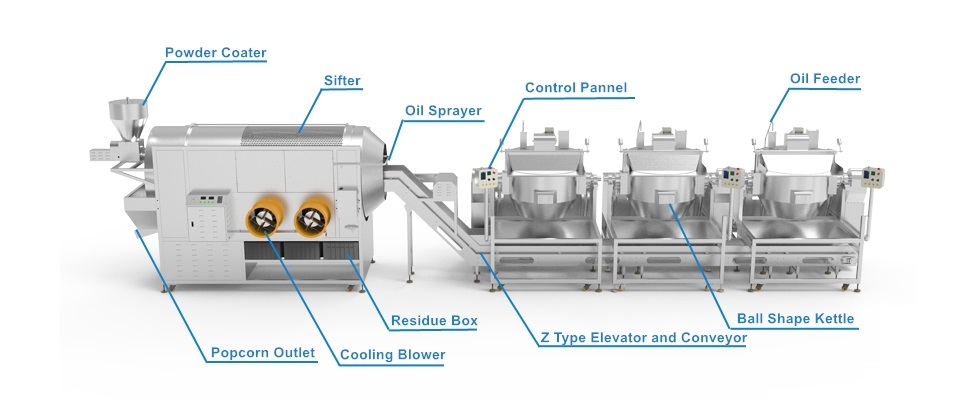
For factories planning to increase production volume, an industrial popcorn production and coating line can combine multiple processing stages into a coordinated system. The final configuration should be selected according to the product type, production target, and actual operating conditions.
How Does Kernel Moisture Variation Affect Production Yield and Operating Costs?
Moisture variation affects more than the appearance of finished popcorn. It can also influence raw material consumption, machine utilization, labor efficiency, and the amount of product that meets quality requirements.
Consider a factory that processes the same quantity of raw kernels every day. If one delivery produces a higher unpopped kernel rate or lower expansion performance, the factory may need more raw material to achieve its planned output. Additional inspection or adjustments may also increase production time.
Manufacturers can monitor the following indicators to understand the impact:
- Unpopped kernel rate: The percentage of kernels that remain unpopped after processing.
- Expansion performance: The finished volume or expansion result compared with the raw kernel input, using a consistent measurement method.
- Finished-product rejection rate: The amount of popcorn that does not meet the required size, appearance, or texture standards.
- Effective hourly output: The quantity of acceptable finished popcorn produced per operating hour.
- Raw material consumption: The amount of kernels required to produce a specified quantity of saleable popcorn.
One useful calculation is:
Unpopped Kernel Rate (%) = Unpopped Kernel Weight ÷ Total Raw Kernel Weight × 100
For example, if a production test uses 10 kg of raw kernels and 0.5 kg remains unpopped, the unpopped kernel rate is 5%. This is an illustrative calculation. Manufacturers should use a consistent sampling and weighing method when comparing different batches.
Tracking these indicators alongside moisture readings helps factories distinguish raw material problems from equipment or operating problems. It also provides more useful information when discussing kernel quality with suppliers.
Why Must Cooling, Coating, and Packaging Also Be Considered?
Kernel moisture mainly affects the popping stage, but the consequences can continue through the rest of the production process. If different batches produce popcorn with noticeably different sizes or textures, coating and packaging performance may also become less predictable.
For example, variations in popcorn size and surface structure may affect how evenly seasoning or caramel coating is distributed. Differences in product texture may also influence handling and the final appearance of packaged popcorn.
After popping, appropriate cooling and separation help prepare the product for subsequent processing. XFD's popcorn cooling and filtering machine is designed to cool popcorn and separate unwanted materials as part of an industrial production arrangement.
For flavored popcorn, the coating stage should also match the product recipe and production capacity. Manufacturers can review XFD's industrial popcorn coating equipment when planning the processing system for caramel, chocolate, or other flavored products.
Packaging should be considered as well. If the popping stage produces more product than the downstream equipment can process, the factory may experience accumulation and unnecessary handling. A suitable popcorn packaging machine should be matched to the actual output of the complete line.
In other words, stable popcorn production depends on more than the popping machine alone. Raw material quality, heating conditions, cooling, coating, and packaging should work together.
What Should Manufacturers Check Before Increasing Production Capacity?
Before increasing the output of an industrial popcorn factory, manufacturers should confirm that their raw materials can support the planned production volume. Increasing machine capacity without controlling kernel quality may simply increase the amount of inconsistent product being processed.
A practical pre-production checklist includes:
- Confirm that the kernel variety is suitable for the intended popcorn product.
- Check moisture content against the supplier's recommended range.
- Compare moisture readings from multiple samples within the batch.
- Run a representative popping test before full-scale production.
- Record unpopped kernel rate and finished-product expansion performance.
- Confirm that the popping machine settings match the actual kernel characteristics.
- Check whether cooling, coating, and packaging equipment can handle the expected output.
- Keep production records so that changes between raw material batches can be identified.
For manufacturers evaluating a new production line, it is useful to provide the equipment supplier with information about the kernel variety, target output, finished popcorn type, and coating requirements. This makes it easier to discuss an appropriate machine configuration rather than selecting equipment based only on its rated capacity.
Frequently Asked Questions About Kernel Moisture and Industrial Popcorn Production
What is the ideal moisture content for popcorn kernels used in industrial production?
A moisture content around 13% to 14.5% is commonly used as a reference for many commercial popcorn kernels. However, the suitable range depends on the kernel variety and supplier specifications. Manufacturers should confirm the recommended moisture range with their raw material supplier and verify it through popping tests.
What happens if popcorn kernels have too little moisture?
Kernels with insufficient moisture may not generate enough internal steam pressure to pop properly. This can result in more unpopped kernels, smaller popcorn, lower expansion performance, and inconsistent finished-product quality.
Can popcorn kernels have the correct average moisture content but still produce inconsistent results?
Yes. A batch may have an acceptable average moisture reading while individual kernels have different moisture levels. These kernels may respond differently to heating, resulting in uneven popping times, expansion, and finished texture. Sampling from multiple locations can help identify this problem.
How often should popcorn manufacturers test kernel moisture?
Manufacturers should test incoming raw material batches and conduct additional checks during storage, especially when packaging has been opened or storage conditions have changed. The testing frequency should be based on supplier consistency, storage duration, production volume, and the factory's quality-control procedures.
Can an industrial popcorn machine solve kernel moisture problems?
No machine can completely correct unsuitable or highly inconsistent kernel moisture. Industrial popcorn equipment can provide controlled processing conditions, but manufacturers still need to inspect raw materials, maintain suitable storage conditions, and adjust operating settings according to popping test results.
How can manufacturers reduce unpopped kernels in high-volume production?
Start by checking kernel moisture, variety, size, and raw material condition. Then review heating temperature, popping time, batch loading, and equipment operation. Recording unpopped kernel rates for different deliveries helps identify whether the problem comes from raw material variation or processing conditions.
Does kernel moisture affect caramel popcorn production?
Yes. Kernel moisture can affect popping performance, expansion, and finished popcorn texture. These differences may influence the consistency of the subsequent caramel coating process. Manufacturers should control kernel quality before popping and ensure that the cooling and coating stages are matched to the production requirements.
What information should a factory provide when choosing an industrial popcorn production line?
Useful information includes the kernel variety, target hourly output, desired popcorn shape and texture, product flavors, coating requirements, available factory space, and electrical supply. Providing these details helps the equipment supplier recommend a production configuration that better matches the factory's actual needs.
Consistent industrial popcorn production starts with consistent kernels. By monitoring moisture variation, improving raw material storage, and evaluating actual popping performance, manufacturers can reduce avoidable production fluctuations and maintain more predictable finished-product quality. Combined with appropriately selected popping, cooling, coating, and packaging equipment, these practices help build a more reliable popcorn production process.
For industrial popcorn equipment and customized production solutions, visit XFD Popcorn to explore available machinery and discuss your factory's production requirements.